What Hiring Managers Really Mean by “Culture Fit”
May 22, 2026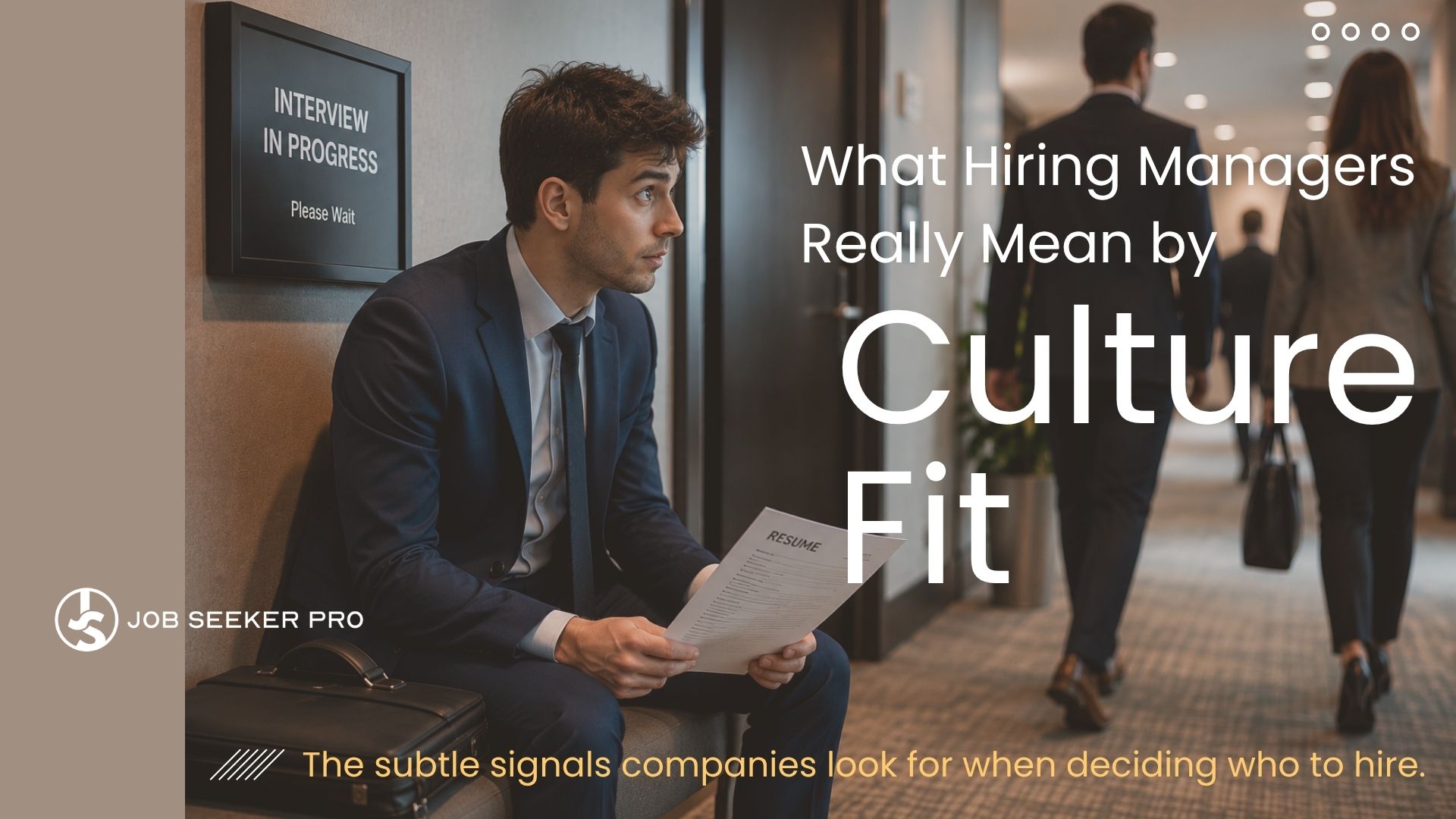
Most candidates hear the phrase “culture fit” and immediately think:
🔸 “They want someone outgoing.”
🔸 “They only hire people who act like them.”
🔸 “It’s probably code for something unfair.”
Sometimes, yes, companies misuse the phrase.
But in many interviews, culture fit is actually something much more practical.
Hiring managers are quietly asking themselves:
“Can I trust this person to work through hard moments with this team?”
That’s it.
Because skills get someone into the interview.
Behavior gets someone hired.
I learned this years ago while helping a candidate prepare for a final interview at a mid-sized technology company.
His name was Jason.
On paper, he wasn’t the strongest applicant. He had taken time away from work to care for his father during cancer treatment. His resume had gaps. Another candidate had more technical certifications and a more polished background.
Jason was nervous before the interview and kept apologizing for his resume.
Then he said something I’ll never forget.
“I know I’m not the perfect candidate. But when things get stressful, I stay calm. And when people around me are overwhelmed, I help.”
That sentence told me more about him than any resume bullet point could.
During the interview, the hiring manager asked a question many candidates get:
“Tell me about a difficult situation at work.”
Most people answer with a rehearsed story designed to sound impressive.
Jason answered differently.
He talked about helping train a new employee who was struggling and close to quitting. He admitted he didn’t handle everything perfectly at first. He explained what he learned about patience and communication. He spoke honestly, without trying to sound like a superhero.
Afterward, the hiring manager called me.
“You know why we hired him?” he said. “Everyone else tried to impress us. Jason made us feel like we could trust him.”
That was culture fit.
Not hobbies.
Not personality tests.
Not whether he liked the same music as the team.
🔸 It was emotional intelligence.
🔸 Self-awareness.
🔸 Communication under pressure.
🔸 Respect for others.
🔸 The ability to work through challenges without creating chaos.
Hiring managers pay attention to things candidates often overlook:
🔸 How you speak to the receptionist.
🔸 Whether you listen carefully or interrupt.
🔸 How you explain conflict.
🔸 Whether you take accountability.
🔸 How you react when you don’t know an answer.
They are imagining what it would feel like to work with you on a stressful Tuesday afternoon.
That’s the real interview happening underneath the interview.
The good news is this:
You do not have to become someone else to be a strong culture fit.
You do not need to be the loudest person in the room.
You do not need to have a perfect resume.
You do not need polished corporate jargon.
You just need to show that you can collaborate, communicate, adapt, and treat people well when things are hard.
Because the candidates people remember most are rarely the most rehearsed.
They’re the ones who make others feel safe working beside them.
And Jason?
Two years later, he became a team lead.
The same company that almost overlooked him now trusts him to mentor new hires.
Funny how that works.
The average online job receives >250 applications, what is your PLAN to stand out? This training is your plan:
