Someone Is Looking You Up on LinkedIn. What Will They Find?
Sep 27, 2026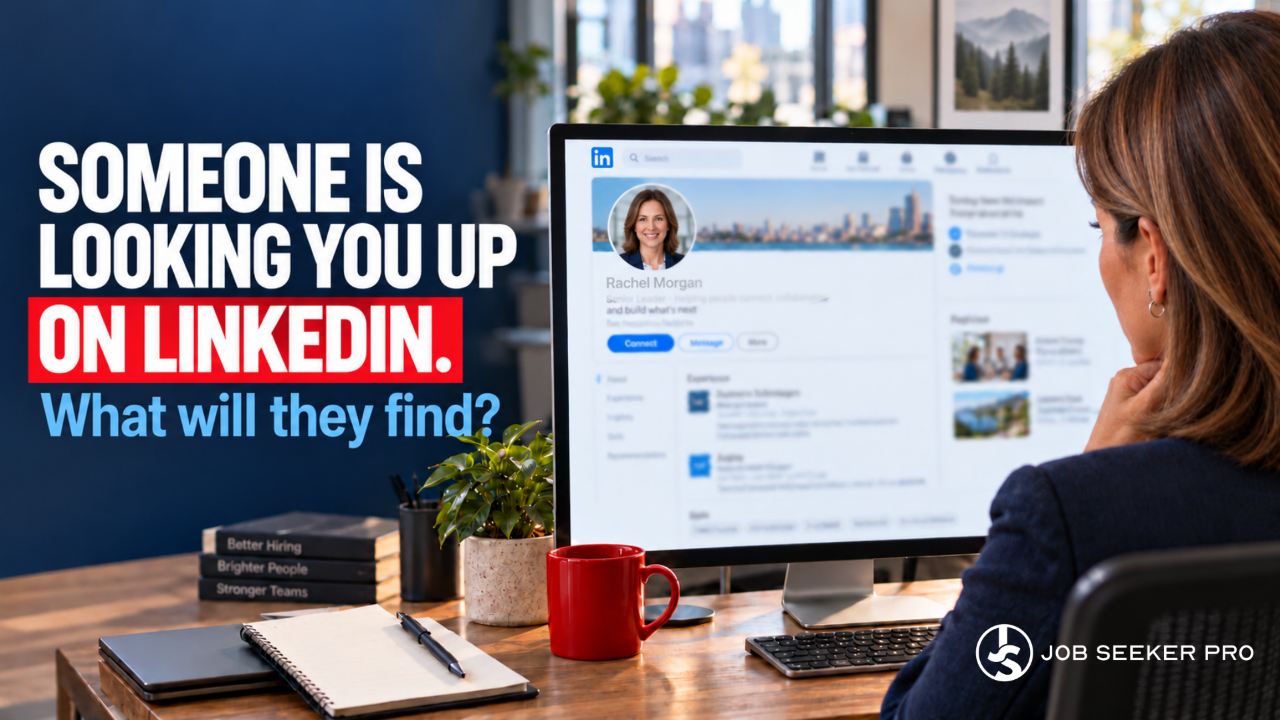
Someone may be deciding whether to contact you before you even know there is an opportunity.
Picture this.
A former colleague mentions your name during a conversation.
“You should talk to Rachel. She’d be great for this.”
It could be a job opening, a consulting project, a potential partnership, or a client who needs exactly what you offer.
The other person pulls out their phone.
“What’s her last name?”
A few seconds later, they are looking at your LinkedIn profile.
What happens next?
For Rachel, that question became uncomfortable.
She had spent the past four years becoming someone her profile barely described. She had taken on bigger projects, strengthened client relationships, and become the person her team called when something complicated needed to get done.
Her LinkedIn profile still showed an old job title, a list of routine responsibilities, and an About section she had written during a job search years earlier.
She wasn’t hiding her experience intentionally. She was busy building it.
Updating LinkedIn always felt like something she could do later.
Then a former colleague reached out about a possible opportunity.
“I sent your profile over,” he said. “But you might want to update it. I had to explain quite a bit.”
That last sentence stayed with her.
I had to explain quite a bit.
Her profile needed someone standing beside it, filling in the missing pieces.
The person looking may have very little context
Rachel had always thought of LinkedIn as a place to visit when she needed a job.
She hadn’t given much thought to the people who might visit her profile when she wasn’t looking.
A prospective client checking her background. A former coworker considering a referral. Someone she met at an event who wanted to understand what she did.
These people might not know Rachel personally. They would form their first impression based on her profile, without knowing about the accomplishments and experience she hadn’t included.
Rachel opened her profile and tried to read it as a stranger.
Her headline named her position but offered little sense of her expertise.
Her About section called her a “results-driven professional with excellent communication skills.” It could have described almost anyone.
Her experience section explained what she was assigned to do. It said very little about what she had actually accomplished.
Nothing was false. But much of what made her valuable was missing.
Would someone recognize the professional you are today?
You know how much you have grown.
You remember the difficult project, the customer you helped, the process you improved, and the responsibility you earned.
A visitor to your profile doesn’t have those memories.
If your most meaningful experience lives only in your head, someone else has to work harder to understand why they should contact you.
That doesn’t mean every profile needs impressive numbers or a dramatic success story. A straightforward example can say plenty.
“Responsible for customer communication” tells someone part of your job.
“Helped customers navigate delayed orders by coordinating updates across sales, shipping, and service” helps them understand how you work.
Specificity gives people something to remember and something to ask you about.
Rachel started with what was missing
She didn’t try to make herself sound more important.
She added the work she could confidently discuss over coffee.
She rewrote her headline to reflect her current expertise. She replaced generic phrases with a short explanation of the problems she helped solve. Under her current role, she added a few examples of projects, improvements, and contributions.
She also checked the basics. Did her dates and titles agree with her résumé? Did her photo still look like her? Was it clear what she was doing now?
Finally, she read her recent comments and posts.
Would someone encountering her for the first time get a fair sense of her judgment, interests, and how she treated other people?
The finished profile sounded familiar.
It sounded like Rachel.
Take a look before someone else does
Open your profile and ask yourself:
- Can someone quickly understand what I do?
- Does this reflect my current experience and direction?
- Have I included examples that make my strengths believable?
- Does the language sound like something I would actually say?
- What would a former colleague have to explain on my behalf?
You don’t have to document every accomplishment. Start with the missing detail that would help the right person understand your value.
Rachel couldn’t know how many people had visited her old profile and moved on. She also couldn’t assume an update would bring an immediate opportunity.
But the next time someone said, “You should talk to Rachel,” her profile would help carry the conversation forward.
Someone is looking you up on LinkedIn. Will they find the professional you have become, or the one you were several years ago?
Brian Howard - Job Seeker Pro
The average online job receives >250 applications, what is your PLAN to stand out? This training is your plan:
