When Your Job Search Feels Like a Dark Path
Mar 31, 2024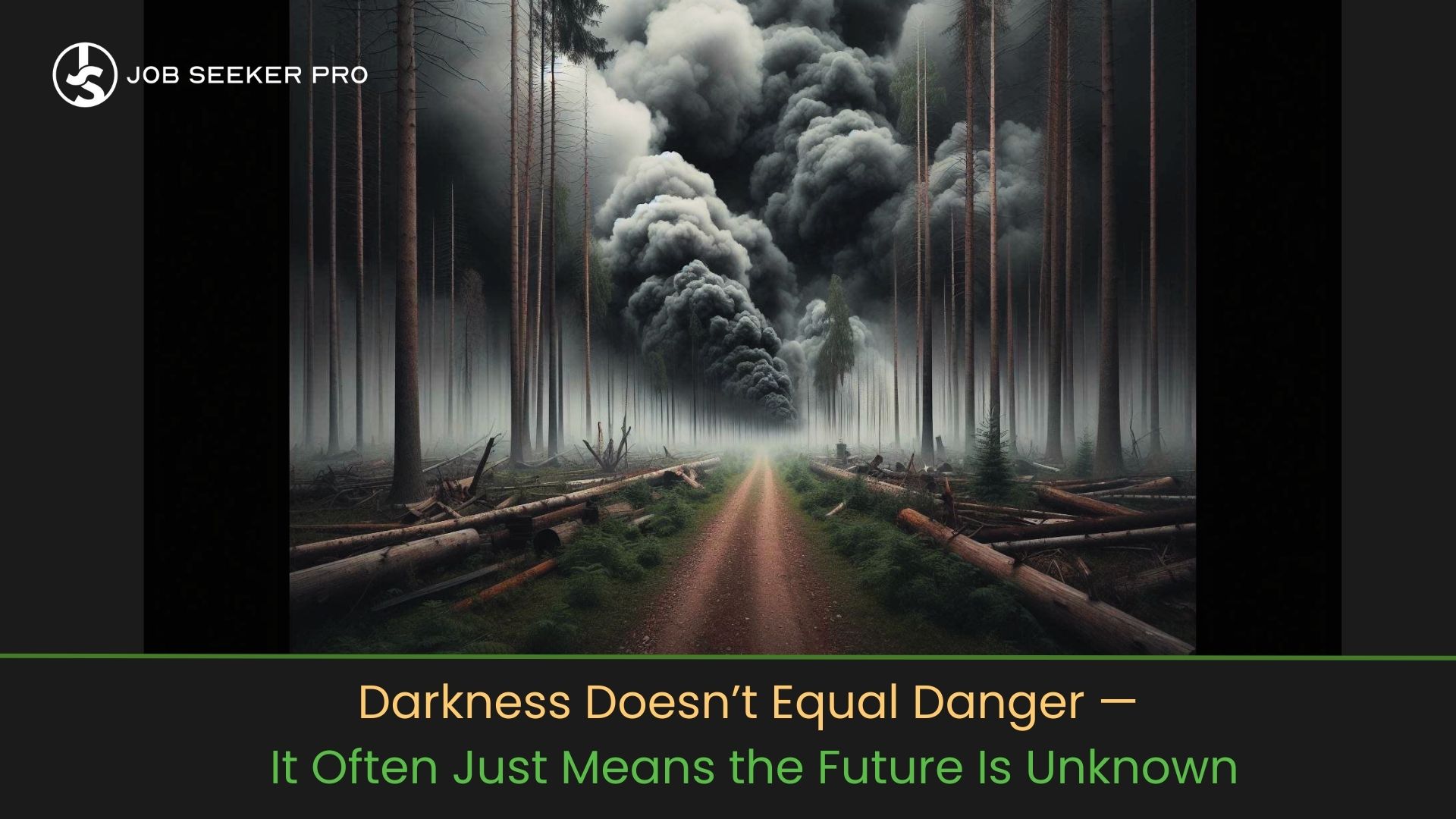
There’s a point in nearly every job search where the silence gets loud.
Where rejection starts to feel personal.
Where you begin to wonder if you’re moving forward—or just walking in circles.
During my job search in mid-2020—at the height of the pandemic—I experienced a level of difficulty and emotional weight that many job seekers can relate to.
Organizations around the world were laying off millions of people. Entire industries were frozen. And for those of us in sales or revenue-related roles, it often felt like we were the last candidates anyone wanted to hire.
Like many job seekers, I encountered setbacks that were both professional and deeply personal:
-
I missed out on opportunities I thought I had secured.
-
I invested weeks into interview processes, only to be ghosted.
-
I was a finalist multiple times—but never the final choice.
The longer it went on, the more it started to feel like I was walking forward into a future I couldn’t see.
At one point, I created an AI-generated image that captured exactly how my job search felt: moving down a path disappearing into darkness and clouds. It was an honest reflection of the uncertainty and emotional toll of searching for work during a global crisis.
But eventually, I learned something important:
Darkness doesn't always mean danger. Often, it just means you can’t see what’s ahead yet.
And in a job search, uncertainty is not evidence of failure—it’s simply the nature of the process.
The Two Mindset Shifts That Helped Me Keep Moving
1. Don’t confuse “lack of visible progress” with a negative outcome
Job searches are rarely linear. You can do everything “right” and still experience delays, silence, or rejection. That doesn’t mean you’re behind. It means the system is unpredictable.
When the path looks dark, it’s easy to interpret it as a sign that the future will also be dark.
But that assumption is rarely true.
Believing the worst about the future is often believing something that cannot be verified—and it’s incredibly counterproductive.
No one can predict what’s around the next corner. A single interview, a referral, or a hiring manager’s timing can change everything quickly.
Progress can happen suddenly—even after weeks or months of uncertainty.
2. Use disciplined action when motivation and confidence are low
The second lesson is more practical—and honestly, more difficult.
Sometimes the only way forward is action before confidence.
There were days I felt discouraged, anxious, and emotionally depleted. But I learned that waiting to “feel ready” wasn’t realistic. Instead, I relied on what I now call forced behavior:
-
I made myself apply even when I felt hopeless.
-
I created small “special projects” to stand out.
-
I followed up strategically, even after silence.
-
I stayed engaged even when the process felt unfair.
I didn’t deny the emotions. I acknowledged them.
But then I worked anyway.
And over time, small wins started to appear—maybe a response, a conversation, a second interview, a new connection. These wins weren’t always huge, but they were evidence that effort could still produce results.
Eventually, one of those efforts led to a job offer.
Practical Advice for Job Seekers in the Middle of the “Dark Cloud”
If you’re navigating a difficult job search right now, here are a few strategies that may help you move forward with more control and clarity:
✅ Focus on controllables
You can’t control hiring timelines, internal decisions, or who else is interviewing.
But you can control:
-
Your consistency
-
Your outreach strategy
-
Your interview preparation
-
Your messaging and positioning
-
Your network activity
-
Your emotional boundaries
✅ Build momentum with small daily commitments
Momentum reduces overwhelm. Examples:
-
2 applications/day
-
2 outreach messages/day
-
20 minutes of interview practice
-
One portfolio-style project per week
Your job search should feel like a system—not a daily emotional rollercoaster.
✅ Use projects to differentiate
Hiring managers are overloaded. Attention is scarce.
Short projects that demonstrate capability can change outcomes quickly:
-
A 30/60/90-day plan
-
A mini audit of their current strategy
-
A mock pitch deck or account plan (for sales roles)
-
A targeted case study relevant to their business
-
A short Loom video explaining how you’d approach the role
This shifts you from “candidate” to problem-solver.
✅ Don’t take silence personally
Ghosting is painful, but in most cases it reflects internal chaos, hiring freezes, shifting priorities, or poor process—not your value.
Silence doesn’t mean you’re unqualified.
It means the system isn’t designed with job seekers in mind.
✅ Protect your confidence like a resource
A job search can quietly drain your identity and self-worth if you're not careful.
Build a protection plan:
-
Exercise
-
Meaningful conversations
-
Daily structure
-
Breaks from job boards
-
Limiting time spent ruminating
Your confidence isn’t just emotional—it’s strategic. It affects how you show up in interviews.
Final Thought
If your job search feels like walking into dark clouds, you’re not alone.
But darkness ahead doesn’t mean something bad is waiting.
More often, it simply means you haven’t reached the part of the path where the next opportunity becomes visible.
Keep moving.
Keep applying.
Keep building.
Keep reaching out.
Your breakthrough might be closer than you think.
Brian Howard - Job Seeker Pro
The average online job receives >250 applications, what is your PLAN to stand out? This training is your plan:
